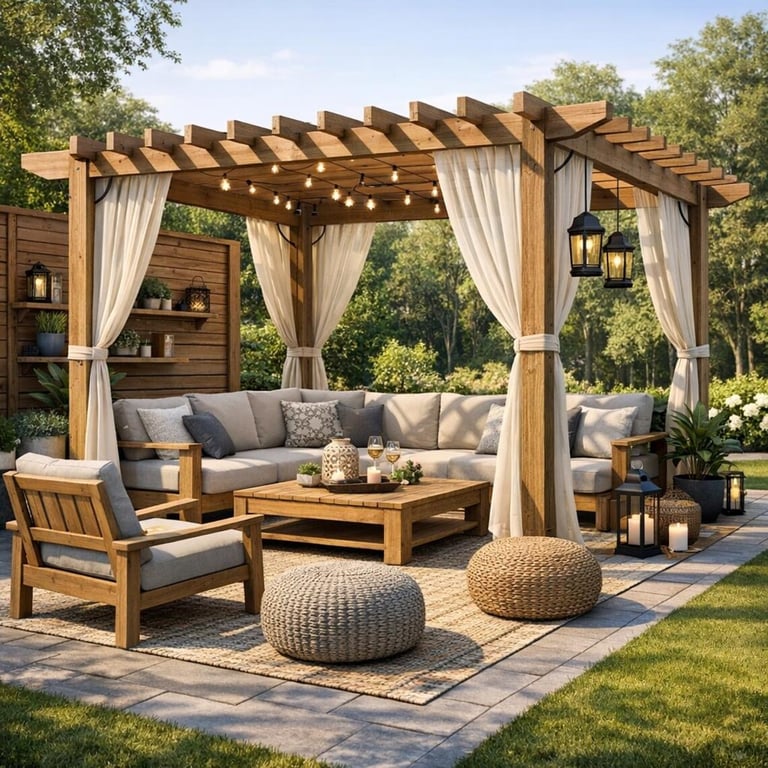
Define how you’ll use it - Decide primary activities: lounging, dining, cooking (outdoor kitchen or grill), reading, socializing, or gardening. - Plan zones if doing more than one activity (e.g., dining area + lounge area). Choose the right location and layout - Place near the house for convenience and power/water access. - Consider sun/shade patterns at different times of day. - Think about privacy (fences, screens, hedges) and view (frame the best sightlines). - Keep circulation clear: allow 30–36 in (75–90 cm) pathways around furniture.
Pick durable, comfortable furniture - Prioritize weather-resistant materials (teak, aluminum, powder-coated steel, resin wicker). - Choose comfortable cushions with outdoor fabric (solution-dyed acrylic like Sunbrella). - Scale furniture to the space—avoid oversized pieces that crowd the patio. - Invest in a focal piece: comfy sofa, dining set, or hammock. Layer lighting for evening atmosphere - Ambient: string lights, lanterns, or hanging fixtures for soft, overall glow. - Focused: sconces or pendant lights over dining or cooking areas. - Accent: uplights for trees, path lights, or spotlights for architectural features. - Use warm bulbs (2700–3000K) and dimmers or multiple circuits for flexibility. Add shade and shelter - Pergolas, retractable awnings, umbrellas, or shade sails protect from sun and light rain. - Consider a freestanding gazebo or a covered roof for year-round use in mild climates. - Use climbing plants on pergolas for natural shade and softer look. Build layers of comfort and texture - Outdoor rugs define zones and add coziness. - Mix textiles (cushions, throws) and textures (wood, metal, woven materials). - Include side tables for drinks and a coffee table for a lounge area. Incorporate greenery and scent - Use container plants for flexibility: tall grasses, palms, evergreens for privacy; flowering plants for color. - Low-maintenance options: lavender, rosemary, ornamental grasses, succulents, boxwood. Create focal points and ambience. -Fire feature: a fire pit or fireplace creates warmth and draws guests in. Follow local codes. -Water feature: small fountain adds soothing sound and masks noise. - Art and décor: outdoor-friendly sculptures, mirrors, or a statement planter. Take care of weather and maintenance - Choose easy-care materials (stain-resistant fabrics, sealed wood, composite decking). - Store cushions or use waterproof storage boxes during storms. - Seal patios, clean pavers, and maintain furniture seasonally to extend life. Personalize within your budget - Prioritize big-impact items first: seating, lighting, and shelter. - DIY ideas: paint old furniture, build a pallet sofa, lay gravel for low-cost flooring, string lights for instant charm. - Thrift stores and online marketplaces can yield quality pieces at low cost. Quick checklist before you finish - Seating for intended number of people and comfortable circulation space. - Adequate lighting for evening use. - Shade or shelter for daytime comfort. - Plants for softness and privacy. - Durable, weather-appropriate materials and a maintenance plan.
A welcoming patio extends your living space outdoors and becomes a favorite spot for relaxing, dining, and entertaining. You don’t need a big budget or a designer to build one— focus on comfort, function, and atmosphere. Here’s a practical step-by-step guide to creating an inviting patio.